
By Juli Fyfe, Registered Psychotherapist & CSIA Instructor
When I moved to Muskoka four years ago, I arrived with a mix of hope, uncertainty, and a quiet ache for community. Relocating later in life can be disorienting—familiar routines fall away, social circles shift, and a sense of rootedness can be hard to find. Despite the beauty of my new surroundings, I felt unanchored. What I didn’t yet know was that my path back to belonging would begin at the base of Hidden Valley Highlands Ski Area.
Skiing has always offered a physical freedom—wind, movement, terrain, rhythm—but teaching skiing introduced me to something deeper: connection. From my very first day in the CSIA jacket, I felt welcomed into a collective that extended far beyond technique, drills, and teaching progressions. I had stepped into a community.
Why Community Matters for Well-Being
Psychological research shows that humans have a fundamental need to belong. Baumeister and Leary (1995) describe this as a universal drive—connection isn’t optional for our well-being; it is essential. Belonging protects mental health, increases resilience, and offers a sense of purpose (Allen et al., 2021). Communities built around shared activity—especially outdoor and physical pursuits—provide particularly strong benefits. They foster positive emotion, self-confidence, and social support (Brymer & Schweitzer, 2017).
For those of us who coach snowsports, the mountainside becomes a living community centre. We show up not only to teach skills, but to share who we are. In turn, we receive that same openness back.
The Instructor Community: Shared Values in Motion
At Hidden Valley Highlands, I quickly learned that ski and snowboard instructors share a distinct set of values:
1. Helping Others Grow
Teaching snowsports is relational at its core. We connect with students’ fears, joys, learning styles, and goals. Helping someone move from cautious glides to confident turns is more than skill transfer—it’s co-creating an experience of trust and achievement. These prosocial behaviours naturally form strong social bonds.
2. Appreciation for Nature
Outdoor experiences support psychological restoration and reduce stress (Kaplan, 1995). Teaching in the crisp winter air, under snowfall and changing light, reinforces our shared gratitude for the outdoors and the land we ski on.
3. Commitment to Physical Activity
Physical activity boosts mood, reduces anxiety, and increases social engagement (Biddle & Asare, 2011). Whether we’re linking turns, laughing on the lift, or debriefing a lesson, we’re participating in a community shaped by vitality and movement.
These shared values are the glue that bind us. They made me feel part of something bigger than myself.
Instructor Courses: Expanding Community Beyond Your Home Hill
Another unexpected gift is how CSIA courses expand your world. Training and certification programs connect you with instructors from other mountains, provinces, and life stages. Your community grows wider.
During these courses, you support one another through challenges, push each other to improve, and celebrate breakthroughs. Relationships form quickly because you are all engaged in the same vulnerable process—learning, adjusting, and striving.
And then there is the joy of skiing together on off-days: carving turns with no agenda, exploring terrain, sharing laughter. These simple moments deepen the sense of belonging in ways that are lasting and meaningful.
Community and Belonging: A Determinant of Aging Well
As I enter my near-senior years, belonging has taken on a new layer of importance. Research on aging consistently shows that social connection is one of the most powerful predictors of aging well. Holt-Lunstad et al. (2015) found that strong social relationships are associated with improved longevity, better cognitive health, and greater overall vitality. Belonging helps protect against isolation—a major risk factor for poorer aging outcomes (Courtin & Knapp, 2017).
Being part of the instructor community keeps me active, socially engaged, purposeful, and mentally stimulated. These are precisely the components that gerontology researchers identify as crucial for aging with resilience and vitality.
In many ways, ski instructing has become both a passion and a protective factor. It keeps me connected. It keeps me moving. It keeps me feeling alive.
Hidden Valley Highlands: Finding My Place
I did not expect that slipping on a red jacket would give me belonging—but it did.
I found colleagues who became friends, mentors who became supports, and students who reminded me daily why humans thrive in connection. We celebrate each other’s wins—earning certifications, teaching breakthrough lessons, or simply making it through a frigid January shift. We check in when someone is struggling. We create meaning together on snow.
In this culture of camaraderie and shared purpose, I found my footing in Muskoka. I found my people.
The Mountains as a Model for Community
The ski hill provides a unique template for belonging—one other sectors could emulate:
- Shared purpose: teach, learn, foster growth
- Collective rituals: morning meetings, shared runs, après-ski gatherings
- Mutual support: everyone lifts each other up
- A culture of mentorship: everyone is both learner and teacher
This is the essence of community: a place where you matter, and where others matter to you.
Conclusion
Skiing is a sport. Ski instruction is a profession. But both are also pathways to belonging. For me, Hidden Valley Highlands opened more than a door—it opened a heart-level connection that helped Muskoka become home and strengthened my sense of vitality as I age.
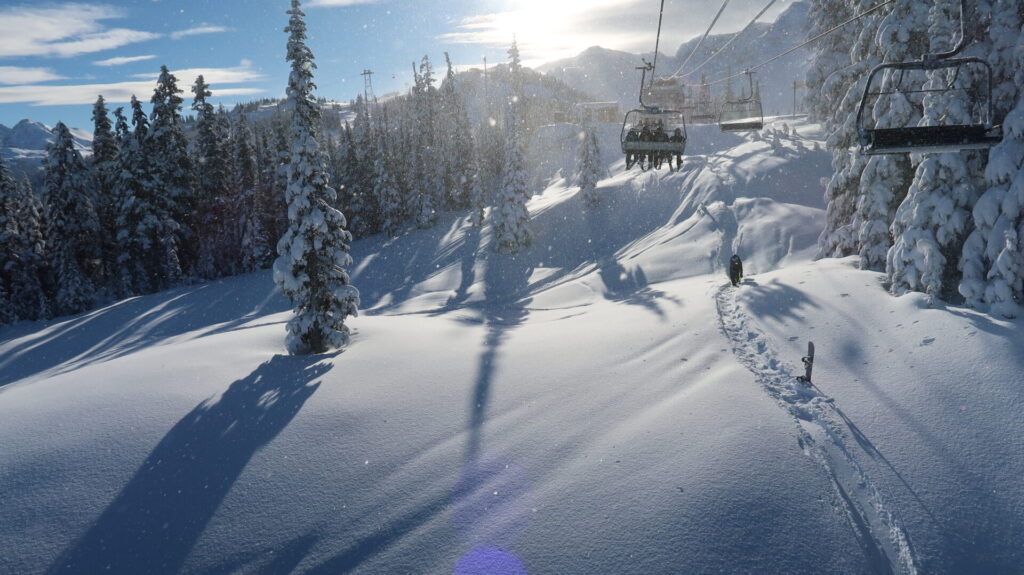
Community doesn’t erase hardship or loneliness, but it softens their edges. It gives us people to lean on, laugh with, and grow beside. And on cold winter days, when the snow drifts softly and the lift hums in the distance, it reminds us that we are part of something shared, meaningful, and deeply human.