
By Frédérik Lépine, CSIA Level 4 Instructor and Course Conductor
CSIA Interski Team Member 2027
The summer season allows us to maintain a more active lifestyle. To build on this momentum, incorporating strength training sessions (which help counteract sarcopenia) is useful for performing well in sports such as downhill skiing. Despite popular belief, July is not too early to apply strength training methodology to create powerful changes in direction.
The goal of strength development is to optimize motor control under increased load, using the squat as an example. To refine the technique, four elements are highlighted to improve precision. The strength developed in the lower limbs will then contribute to the acquisition of technical skills in alpine skiing.
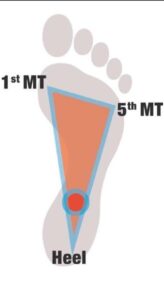
1-The quality of foot support is essential for performing a squat correctly. An even distribution of weight across three points under the feet is necessary to form a triangle (first metatarsal, fifth metatarsal, and heel). Activating the feet facilitates the use of the glutes. This results in better alignment of the legs, including the knees, for direct weight bearing.
2- The position of the pelvis and torso are essential for keeping the back straight. The abdominal muscles must therefore be engaged to maintain spinal stability. This will make the movement more effective as the legs lift the body firmly.
3- Neuromuscular coordination is another important aspect. To create better synergy, each segment of the body must be stabilized to limit the loss of strength when performing an exercise. Overall, stability supports the generation of voluntary motor movement.
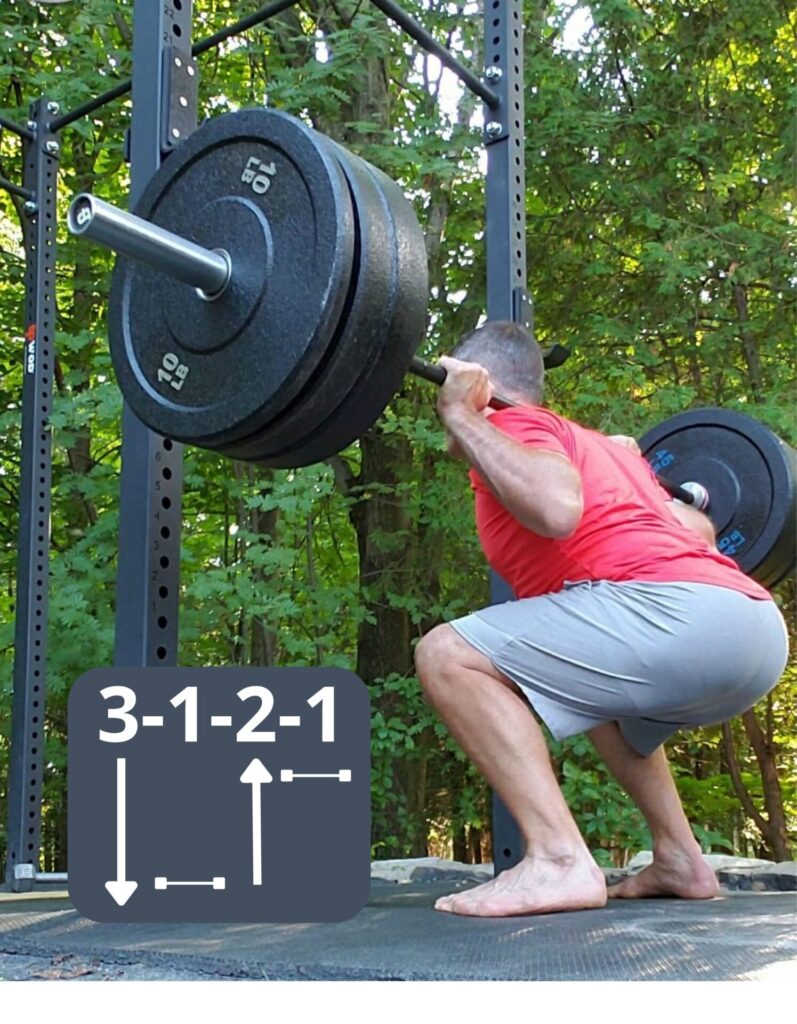
4- Cognitive engagement by maintaining a slow controlled tempo is ideal for developing greater body awareness. There is no point in exercising quickly. It is mainly in the eccentric and isometric phases that the benefits of strength development are concentrated. For example: squats with a tempo of 3-1-2-1. This means that you lower yourself in 3 seconds, hold the position for 1 second, rise in 2 seconds, and hold at the top for 1 second. It is in the first two phases that control requires a high level of attention.
In conclusion, the golden rule in progression is to always be precise first and then add intensity with load. Ultimately, your increased strength will allow you to achieve a higher level of performance in your turn sequences.